Therapeutic Techniques
What is Frequency Specific Microcurrent (FSM)?
Of everything on our service menu, Frequency Specific Microcurrent raises the most eyebrows. The name sounds like lab equipment, the acronym (FSM) doesn't help, and unlike massage, you can't easily picture what happens in a session. So here's a plain-English explanation — what it is, what a session looks like, who tends to seek it out, and an honest word about the evidence.
The short version
FSM is a non-invasive technique that delivers extremely low-level electrical current to tissue — microamps, on the order of a millionth of an amp. That's far below the threshold you can feel, and in the neighborhood of the electrical currents your own cells generate. This isn't a TENS unit buzz or the muscle-twitching e-stim from physical therapy; most clients feel nothing at all during treatment except, often, a gradual softening and warming of the treated area.
The "frequency specific" part: the device delivers current at specific frequency combinations — one frequency conventionally associated with the type of tissue being addressed (muscle, nerve, fascia), paired with one associated with the kind of problem (inflammation, chronic tension, scarring). Practitioners select and sequence these protocols for your situation.
Where it came from
Microcurrent therapy has roots going back decades in physical medicine. The frequency-specific protocols were developed and popularized in the 1990s by Dr. Carolyn McMakin, a chiropractic physician who catalogued frequency combinations against specific tissues and conditions, working from lists that date back to early-20th-century electromedicine. Today FSM is used by physical therapists, chiropractors, sports-medicine practitioners, and bodyworkers — often, as at Resolution, alongside hands-on treatment rather than instead of it.
What a session looks like
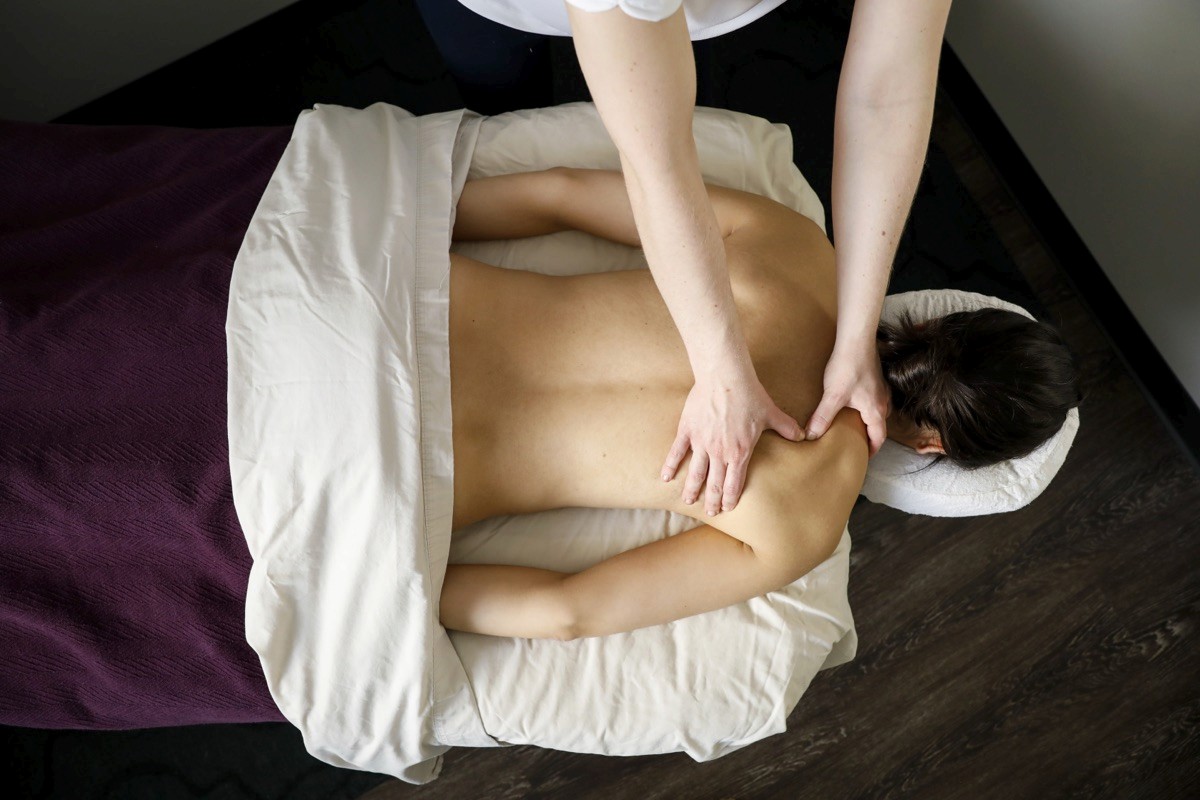
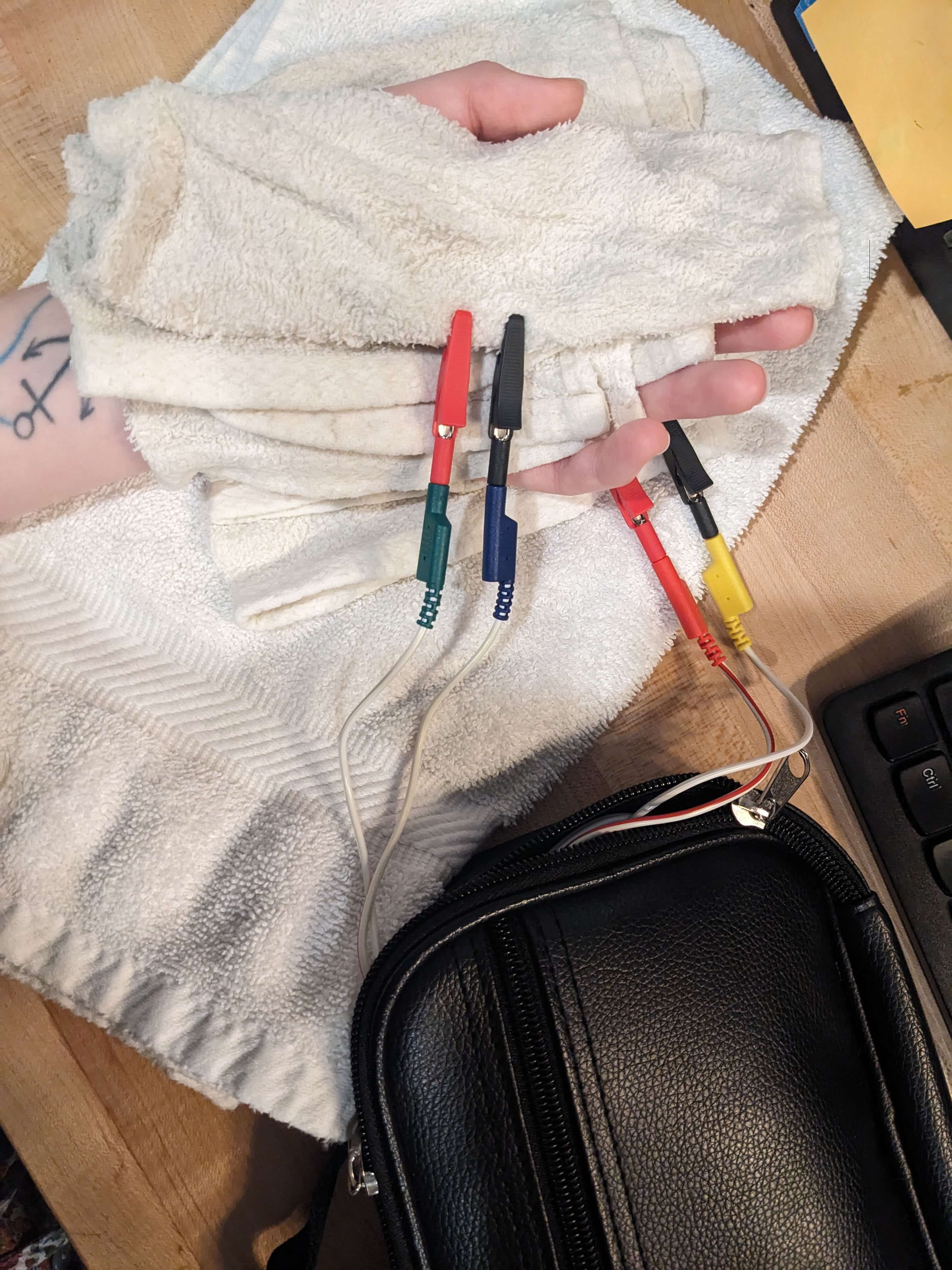
Sessions are unglamorous in the best way. You rest comfortably on the table, fully clothed or draped as with massage. Moist contacts — damp towels or adhesive pads — are placed so the current path crosses the area being treated: for a shoulder, that might mean contacts at the neck and hand. Your practitioner selects frequency protocols and adjusts as the session progresses, often checking how the tissue feels under their hands as it responds.
You'll read, rest, or doze. Many clients describe a session as quietly, cumulatively relaxing — and are surprised at how different the treated area feels when they stand up.
Who seeks it out
Stubborn soft-tissue issues — long-standing muscle tightness that massage helps but doesn't hold, or areas too irritable for direct deep work.
Nerve-related irritation — the burning, zinging variety of discomfort that doesn't respond well to pressure.
Old injuries that plateaued — the sprain from years ago that still "isn't right."
Recovery support — athletes using it alongside massage during heavy training.
It also pairs naturally with hands-on work: softening tissue and calming irritation so massage can go further in the same visit. That combination — rather than FSM alone — is how we most often use it.
An honest note on evidence
We believe in telling you where the science stands, and for FSM it's still developing. There are promising published results — including studies on delayed-onset muscle soreness and case series on stubborn pain conditions — but much of the support comes from clinical experience and case reports rather than large randomized trials. Mechanistically, laboratory work has shown microcurrent can increase cellular energy production (ATP) in tissue, which is the usual proposed explanation for its effects; how completely that translates to clinical outcomes is still being mapped.
So we describe FSM the way we'd want it described to us: a low-risk, genuinely comfortable modality that many clients — including some very skeptical ones — find helpful, especially where conventional approaches have stalled. It is not a miracle machine, and anyone who sells it as one should be politely ignored.
Common questions
Does it hurt? Will I feel anything?
No, and usually no. The current is sub-sensory. What clients notice is the after-effect: tissue that feels warmer, softer, and less guarded.
Is it safe?
FSM is very low-risk for most people. It's avoided in a few situations — pregnancy and implanted electronic devices like pacemakers — which we screen for before any session.
How many sessions will I need?
Acute issues sometimes shift noticeably in one to three sessions; long-standing patterns usually take a series, often alongside massage. Like most things at Resolution, we'd rather set honest expectations at your first visit than sell you a package.
Curious whether FSM fits your situation? Read more on our FSM service page, or book a session online — and feel free to ask us the skeptical questions. We like those.
Andrea Keapproth
Founder, LMT, CCT
Licensed massage therapist with close to twenty years of clinical experience in Madison, WI. Board certified through NCBTMB (License #4092-146), specializing in integrative bodywork that combines Western and Eastern techniques. Degrees from Lakeside School of Massage Therapy and UW-Madison.