Pain Relief
Why that muscle knot keeps coming back — and what actually helps
You know the spot. The one between your shoulder blade and spine that your partner can never quite fix, that feels amazing to press on, and that's back again two days after your massage. If you've ever wondered whether you're doomed to carry that knot forever — you're not, but getting rid of it takes more than pressing harder. Let's talk about what's actually going on.
What a "knot" actually is
Despite the name, nothing in your back is tied in a knot, and nothing needs to be untied. What you're feeling is most likely a trigger point — a small patch of muscle fiber held in contraction, tender to pressure, often referring sensation to other areas. The muscle around it can feel ropy or dense, and pressing the spot reproduces a familiar ache — sometimes right there, sometimes somewhere surprising. Trigger points in the neck and shoulders, for instance, are famous for referring pain up into the head, which is why so many "tension headaches" respond to work on the shoulders.
Why does a patch of muscle do this? The prevailing model: when a muscle is chronically overworked or held in sustained contraction, small regions of it essentially get stuck "on" — locally starved of good blood flow, accumulating metabolic byproducts, and increasingly irritable. The spot guards, the surrounding muscle compensates, and the pattern reinforces itself.
Why it comes back
Here's the part most people miss: the knot is usually the symptom, not the cause. Trigger points form where a muscle is chronically overworked — and muscles get chronically overworked for reasons that don't disappear on the massage table:
Sustained positions. Eight hours at a desk asks small postural muscles — levator scapulae, upper traps, suboccipitals — to hold a low-grade contraction all day, every day. They weren't designed for that job.
Compensation. A weak or inhibited muscle somewhere else forces its neighbors to pick up the slack. Classic example: weak mid-back muscles leave the upper traps doing everything, and the upper traps file a complaint.
Stress. Elevated baseline muscle tension under stress is real and measurable — jaws, necks, and shoulders wear it first. If your knot flares in sync with your workload, that's not a coincidence.
Repetition without recovery. The same motion daily — mouse work, lifting, a tennis serve — without offsetting movement or rest.
Press on the knot all you like; if the eight-hour posture or the compensation pattern is still there Monday morning, biology will faithfully rebuild it.
What actually helps: a two-part approach
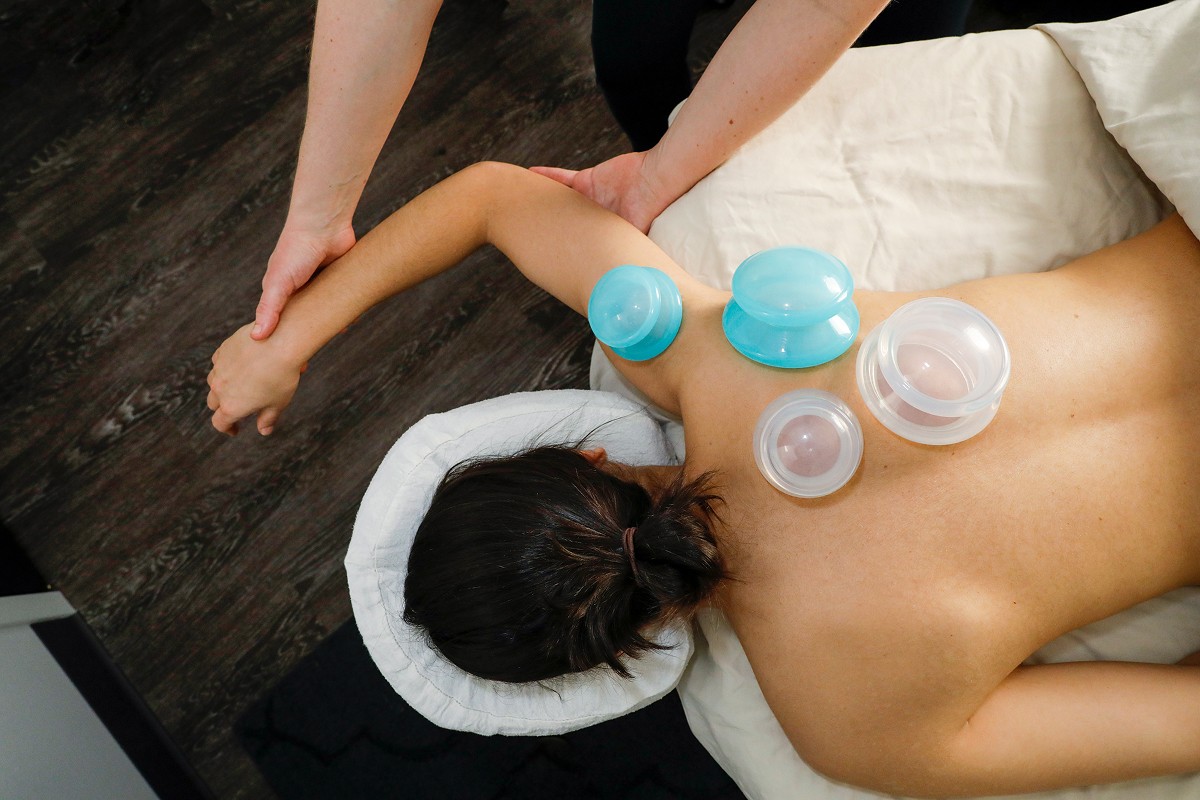
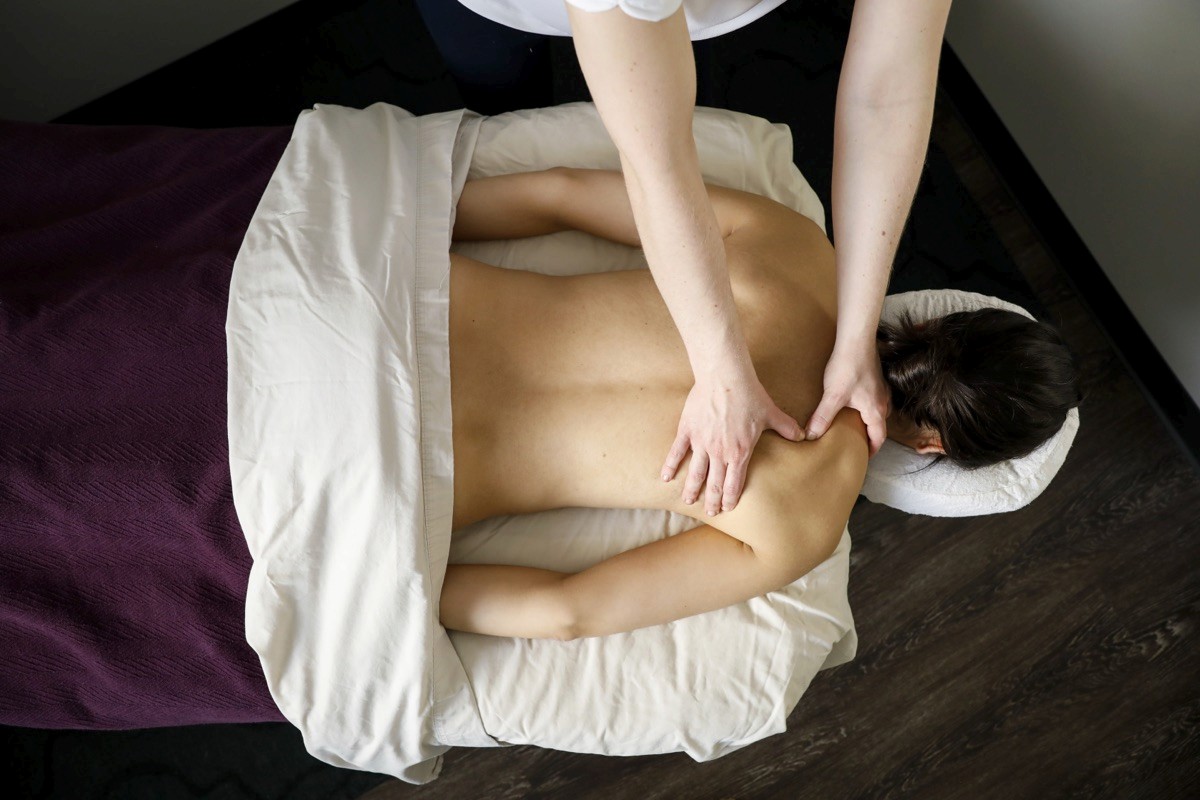
Part one: release the tissue. This is where skilled massage genuinely earns its reputation. Sustained pressure, friction techniques, and work through the full muscle — not just the tender spot — release the contraction and restore blood flow. Most clients feel the difference immediately: the spot softens, the referral fades, range of motion returns.
Part two: change what created it. This is the part that determines whether the relief lasts two days or two months. At Resolution, your therapist will usually send you home with something small and specific, chosen for your actual pattern:
A movement snack — 30 seconds of shoulder rolls or doorway stretches every hour beats 10 minutes of stretching once a day.
A strengthening cue for the underworked muscle that's been outsourcing its job.
A workstation tweak: screen height, armrest position, or simply an alarm to stand up. Small ergonomic changes remove thousands of repetitions of the offending posture per week.
Heat before bed if your pattern is stress-driven — warmth downregulates the guarding.
When a knot isn't just a knot
Most recurring tight spots are exactly what they seem. But get evaluated by a physician if the pain is sharp or electric, follows a clear line down an arm or leg, comes with numbness or weakness, wakes you at night consistently, or arrived after an accident. Massage supports plenty of those situations too — but as part of a plan, not a guess.
Common questions
Why does pressing on it feel so good?
Pressure on a trigger point produces a "good hurt" — partly the relief of the contraction letting go, partly your nervous system's own pain-modulation kicking in. Enjoy it, but remember: the fact that pressure feels good doesn't mean more pressure works better. Tissue responds to appropriate dose, not maximum force.
Do those foam-roller and lacrosse-ball tricks work?
As between-session maintenance, yes, genuinely. As a complete solution, rarely — for the same reason the massage alone doesn't hold: the source pattern remains. Roll the spot for 60–90 seconds, then do the opposite movement of whatever posture created it.
How many sessions until it stops coming back?
If we address both the tissue and the pattern, many clients see recurring spots calm down substantially over three to five sessions. Be suspicious of anyone who promises one — and of anyone who wants to sell you twenty.
Tired of renting relief two days at a time? Book a therapeutic massage and point us at the spot. We'll work backward from there — and give you the homework that makes it stick.

Marcy Gibbons
LMT, License #17471-146
Licensed massage therapist in Madison, WI combining dual expertise as both a rehabber and a healer. Marcy's background spans three decades in home renovation design, a nursing degree, and a B.A. in Art History. A 2023-2024 graduate of the East-West Healing Arts Institute in Madison, she specializes in craniosacral therapy, hot stone, myofascial release, Gua Sha, Tui Na, and therapeutic sports massage. Member of ABMP.