Wellness
Can massage help you sleep? What we see (and what helps most)
It's the most common piece of feedback we get, and it usually arrives unprompted: "I slept so well after my massage." It comes from stressed parents, athletes, desk workers, and people who haven't strung together two good nights in months. That's not a coincidence, and it's not just the placebo of a pleasant hour. Here's why massage helps sleep, what the research supports, and how to use the effect deliberately instead of accidentally.
Why massage helps sleep
The nervous-system downshift. Sleep requires your body to move from its alert, sympathetic state into its rest-and-digest parasympathetic state. Chronically stressed bodies get stuck in the first gear — and massage is one of the most reliable ways to physically walk the nervous system down: heart rate slows, breathing deepens, muscle tone drops. For many people a session is the first time in weeks they've fully entered that state while awake, and the effect carries into the night.
Less pain, better nights. Pain is one of sleep's biggest saboteurs — a hip or shoulder that wakes you at 3 a.m. fragments sleep architecture even when you don't fully remember waking. Addressing the tissue directly often improves sleep as a side effect, which is why our chronic-pain clients frequently report sleep gains before pain gains.
Breaking the tension-anxiety loop. Physical tension and mental restlessness feed each other: a clenched body keeps signaling "threat" to the brain, and a racing brain keeps the body clenched. Interrupting the loop on the body side — which is exactly what an hour of skilled bodywork does — often quiets the mental side too. Clients describe it as their thoughts "coming down from a shout to a murmur."
A serotonin connection. Some massage research has reported increases in serotonin — a precursor to melatonin, the hormone that governs sleep timing. The evidence here is preliminary, but it's a plausible piece of the puzzle.
What the research supports
Fair summary: studies of massage and sleep — in groups ranging from people with insomnia and fibromyalgia to postmenopausal women, hospital patients, and infants — quite consistently report improved subjective sleep quality: falling asleep faster, waking less, feeling more rested. Many of these studies are small, and objective sleep-lab data is thinner than the questionnaire data.
The honest caveats: massage is not a treatment for sleep disorders. Sleep apnea (snoring, gasping, unrefreshing sleep despite adequate hours) deserves a medical evaluation, and chronic insomnia's gold-standard treatment is a specific form of behavioral therapy (CBT-I). Think of massage as strong support for the conditions of good sleep — a calm nervous system and a comfortable body — rather than a cure for a diagnosed disorder.
Using it deliberately
Book later in the day when you can. An evening session lets you ride the parasympathetic wave straight into bedtime instead of spending it in afternoon meetings. Our evening slots go first for exactly this reason.
Keep the evening after a session unscheduled and screen-light. A massage followed by three hours of email is a rinsed-away massage.
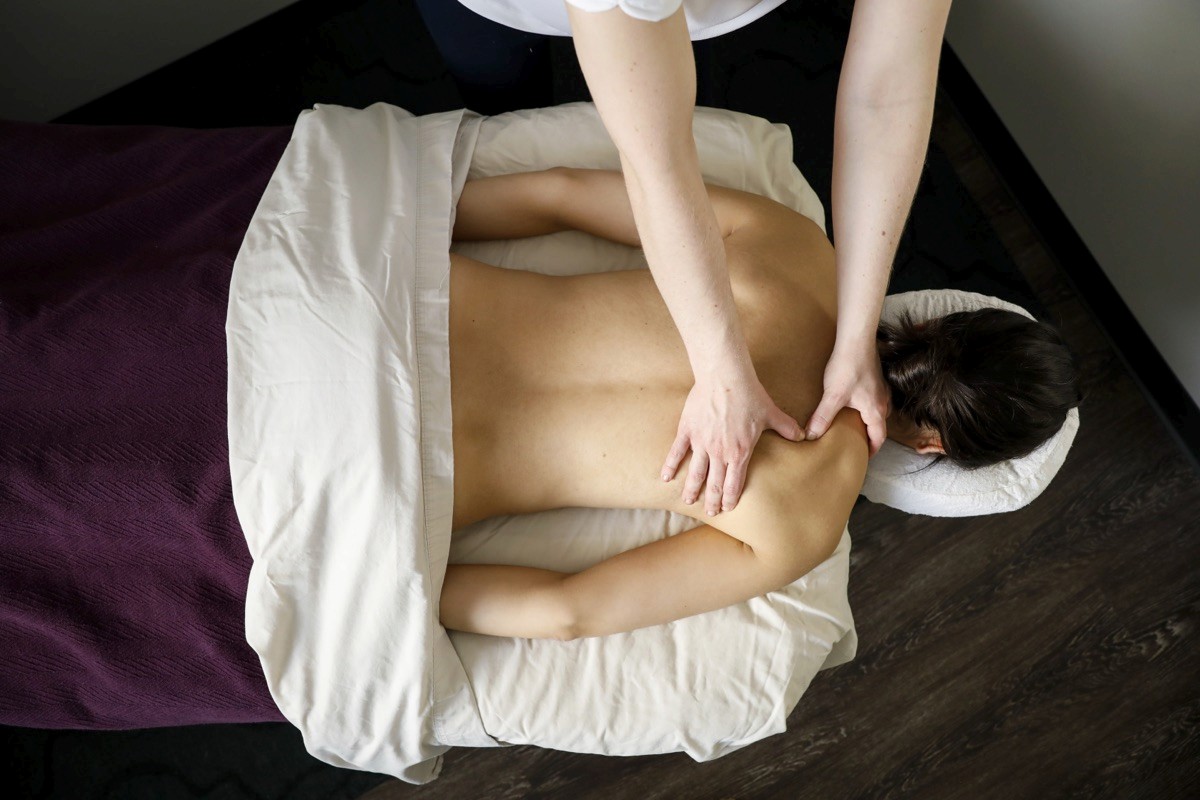
Tell your therapist sleep is the goal. A sleep-focused session leans into slower, rhythmic, full-body work — long strokes, unhurried pacing, extra time on the neck, scalp, and feet — rather than intense deep-tissue problem solving. Same table, meaningfully different session.
Watch the pattern, then space sessions to overlap it. If a massage buys you four or five better nights, that's data. Booking every two to three weeks keeps the benefit overlapping instead of restarting from scratch each visit.
Stack it with sleep basics. Consistent wake time, morning daylight, cool dark room, caffeine before noon. Massage amplifies good sleep hygiene; it can't outwork bad habits alone.
Common questions
Why do I sleep badly the night after a very deep session?
Occasionally intense deep-tissue work leaves people achy and restless for a night — the flip side of dosage. If that's you, ask for moderate pressure, or schedule deep work earlier in the day.
Relaxation massage or therapeutic massage for sleep?
If pain is what wakes you, therapeutic — treat the saboteur. If stress is what keeps you from falling asleep, relaxation-style work. Not sure which you are? Say exactly that at booking; the first session will tell us.
How fast will I notice?
Most people notice the very first night. The more meaningful change — a better baseline across the week — typically emerges over the first few regular sessions.
If your sleep has been running on fumes, a session is a pleasant experiment with a real chance of working. Book online — and if you can, take the evening slot and go straight home to bed.

Heather Durkin
LMT, License #4688-146
Licensed massage therapist with 8+ years of experience in Madison, WI. Certified in sports massage and fibromyalgia treatment, with specialized experience supporting oncology and chemotherapy patients. Heather focuses on chronic pain, accident recovery, hip and gluteal issues, neck and shoulder stiffness, and carpal tunnel. Graduate of Lakeside School of Massage Therapy and East-West Healing Arts Institute.